
Interactions between Listeria and the host immune defense systems
One major research interest of my laboratory is uncovering protein-protein interactions between host and pathogen proteins. Listeria monocytogenes is opportunistic, food-borne pathogen that can compete with host intestinal microbiota to invade intestinal tissue, replicate in mesenteric lymph nodes, and spread to distal site of infection like the spleen, liver, brain, and placenta. Although most humans can prevent Listeria infections, it can be potentially lethal to immunocompromised individuals and cause significant impacts on the fetus of a pregnant woman. Being an intracellular pathogen, Listeria has served as a model organism to uncover novel facets of infection biology, cell biology and fundamental microbiology. However, the internalin family of proteins encoded by Listeria, characterized by the presence of a leucine-rich repeat (LRR) domain, remain largely uncharacterized. Therefore, using classical techniques and recently developed proximity ligation assays (PLAs), my lab aims to identify host factors that interact with these proteins using mass spectrometry, and then validate and characterize these interactions using protein biochemistry, cell biology, and genetic manipulation of host and Listeria genomes to uncover the roles of these proteins during infection.
Combatting the rising global bacterial resistance crisis
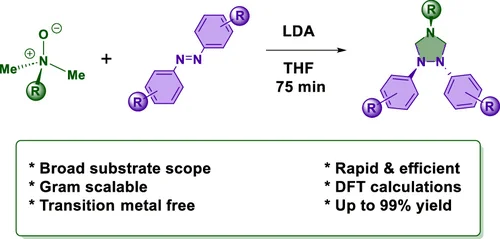
It is now predicted by 2040, more than 45 million deaths, or about 1 every 1.4 seconds, will be attributed to bacteria for which we will not have effective antibiotics. As such, the World Health Organization has declared this an international health crisis. The solution to this problem does not lie in the use of old or current antibiotic compounds, but rather it requires the identification and optimization of new compounds that carry broad antibiotic potential and reduced propensity for the bacteria to develop resistance. In collaboration with synthetic chemists within the Chemistry and Biochemistry department at Duquesne, my research group is actively designing and testing compounds for which no bioactivity has been investigated. Our initial efforts with Dr. Montgomery’s group led to a peer-reviewed publication (Frankos et al., 2026) and served as some of the preliminary data for the Henry Charles Leach II Fund grant that we were awarded.
Characterizing cellular phenomena that regulate protein expression
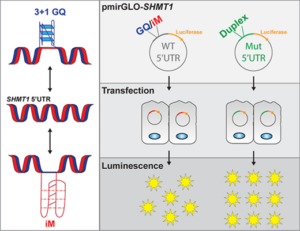
My research group loves to explore how the proteins involved in different disease states are regulated at the cellular and molecular levels. We collaborate with Dr. Mihailescu (Duquesne), where we are interested in the role of non-canonical structures that form in DNA and RNA. While the Mihailescu group characterize these structures in vitro using a combination of biophysical techniques, our group uses cellular biology approaches to understand the importance of these structures in human cells. This has already led to one publication (Palumbo et. al, 2026) and one publication that is currently undergoing peer-review.
Additionally, established a collaboration with Dr. Castellon (Nasuti College of Osteopathic Medicine) where we are interested in understanding the role of Alu elements, or “jumping genes”, identified in the Angiotensin-I-converting enzyme gene. While the presence of the Alu element has been shown to directly regulate the expression, and subsequent activity levels with implications in multiple diseases, the molecular mechanisms of this regulation remain an interesting question that we are exploring together.
Pathogenic Hijacking of Plasma Membrane Cholesterol
My laboratory is interested in understanding how plasma membrane (PM) cholesterol plays a role in host-pathogen interactions. As the most abundant lipid species in the mammalian PM, cholesterol has emerged as a common target for bacterial pathogens. Cholesterol plays several critical roles in the structure and function of the PM, such as by maintaining the fluidity, permeability, and integrity of the lipid bilayer through association with membrane receptors, transporters and channels, as well as being involved in diverse signaling pathways. A small pool of cholesterol, termed accessible cholesterol, acts as a signaling molecule to direct the localization of proteins to and within membranes as well as serving as an indicator to total cholesterol levels. We previously demonstrated that depletion of accessible cholesterol is sufficient to block Listeria cell-to-cell spread during infection. However, the underlying mechanisms of this restriction are poorly understood. Moreover, since cholesterol is present in every mammalian membrane, it is likely that pathogens have evolved novel strategies to manipulate this cholesterol to subvert host defenses or to enhance the pathogens virulence. My lab will use molecular and cell biology to identify bacterial proteins that regulate host cholesterol levels and determine the biochemistry carried out by these proteins. Together, these findings will define new roles for cholesterol in host-pathogen interactions.