Author Archives: admin

Crystal Structures of Ceg10 – A labor of Love

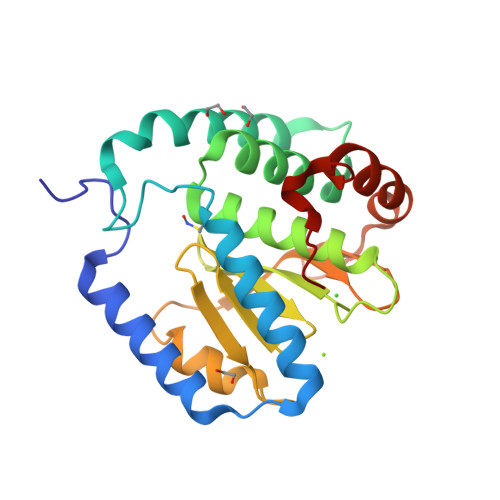
Crystal Structure of Ceg10

Today, the crystal structure of Ceg10, an effector protein from Legionella was deposited and released at the RSCB Protein Data Bank (PDB). While a lot remains to be determined about its function and targets during an infection, we are excited to finally release some of what we have learned about this protein in the last 8 years! The Ceg10 crystal structures are part of a collaborative project between Dr. Heisler’s lab and the Gammon, Alto, and Taglialucci lab’s at UT Southwestern Medical School.

More about what Ceg10 does during a viral infection can be found in a recent preprint: Exploiting Bacterial Effector Proteins to Uncover Evolutionarily Conserved Antiviral Host Machinery
The crystal structures can be found at the RSCD PDB: 9B8D and 9B8E

Your 2024 March Madness Winner: Cate

Disclaimer: I don’t really know anything about college basketball…

This was how the bracket was submitted by Cate this year. Yet, somehow she managed to pick more games correctly than anyone else in the lab!

Congrats Cate!

And now what dessert will you be selecting for lab meeting?

New Bracket Leader

Going into the Final 4 match up, Cate has jumped Brianne for most points! Winning is going to come down to who if UCONN or Purdue win more games at this point…

Points Going into the Final Four:
Cate – 71
Brianne – 70
Ryan – 68
Dr. Heisler – 62
Anastasia – 62
Declan – 61
Megan – 55
Elizabeth – 49

Brianne Pulls Away, but loses her Champion

After last nights games and more upsets, the rankings are as follows:

Brianne – 70
Cate – 63
Ryan – 60 
Dr. Heisler – 54 
Declan – 53 
Megan – 47 
Anastasia – 46 
Elizabeth – 41 

With the elimination of UNC and Creighton this last round, Megan and Elizabeth will not be have enough points left to compete for the top spot. However everyone else (even Brianne with having lost UNC) still has a fighting chance with maximal points possible ranging from 165 (Declan) to 102 (Brianne) so its still really anyone’s game.

New Paper out in Nature Microbiology

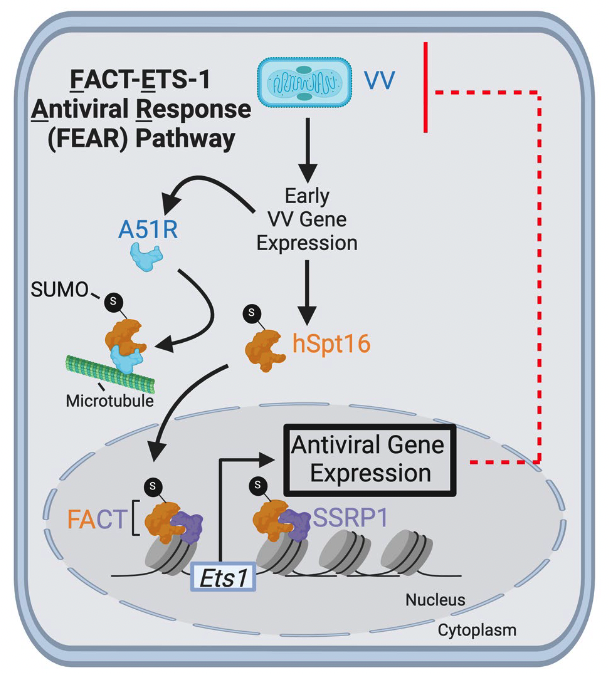
FEAR Pathway

Published today in Nature Microbiology, a massive collaboration lead by “fear”less graduate student Emily Rex in the Gammon lab identifies a new pathway for restricting viral pathogens and how some viruses attempt to evade this pathway. More can be found at: https://www.nature.com/articles/s41564-024-01646-5.epdf?sharing_token=scTW3uKvkhn77dxbSmqu59RgN0jAjWel9jnR3ZoTv0PtJOB0uazhwtp9ry6BHEUNjpgTszmdaCSu_Nf9eB9lAyknydEiu__2sDUwM0iG8EUbIJGY3RbQovhdc6-guMR3hCQJ2aNLgP1odVuOxusrG-J3kvf2297z1uGSL2XXcQA%3D

Round 2 Updates, with some debates

After round 2 (and highly contested point totaling), the standings are:
Cate – 51
Brianne – 50
Ryan – 48
Dr. Heisler – 42
Declan – 41
Anastasia – 38
Megan – 35
Elizabeth – 33

Still plenty of games to play and points to win!

It is still ANY scientists’ game in March Madness

After the first round of the NCAA Men’s March Madness tournament, it is still anyone’s bracket to win (minus a few of you who are going to need some real help with that Kentucky loss!)

Points after round 1:
Cate and Declan – 23
Ryan, Anastasia, Brianne, and David – 22
Megan and Elizabeth 21

Next round starts today and each win is worth 2 pts!

March Madness is Upon Us!

Despite Dr. Heisler’s attempts to use the real March Madness tournament brackets (NCAA WRESTLING) we are going to having a lab competition!

The winner gets to pick a baked good they want Dr. Heisler (David’s wife) to bake for next month’s lab meeting on April 16th. Additionally, and probably more important than PCR superiority, you get BRAGGING rights for a whole year!

Points will be awarded for each pick as follows:
+2 for round 1
+4 for round 2
+8 for Sweet 16
+16 for Elite 8
+32 for Final 4
+64 for Championship

Check back regularly for updated rankings and to see who the winner will be!

Latest Pre-Print From Dr. Heisler’s Postdoc is online

Released today on bioRxiv, the Alto and Gammon labs identify previous unknown host factors that restrict viral replication during cellular infections. Led by graduate student Aaron Embry, this study used a library of bacterial effector protein genes, which Dr. Heisler generated, to screen for proteins that suppressed host immune factors and allowed an otherwise restricted virus to replicate in cells. One effector protein, called Ceg10, that rescued all of the viruses tested, was shown by Dr. Heisler to have a Cys-His-Asp catalytic active site and, using limited proteolysis and X-ray crystallography, a high resolution structure of the core domain of the protein was solved. Additional work remains to be done to determine exactly what Ceg10 does and what its host target(s) is, but a lot of promising work is underway to figure this out!

Abstract:

Arboviruses are a diverse group of insect-transmitted pathogens that pose global public health challenges. Identifying evolutionarily conserved host factors that combat arbovirus replication in disparate eukaryotic hosts is important as they may tip the balance between productive and abortive viral replication, and thus determine virus host range. Here, we exploit naturally abortive arbovirus infections that we identified in lepidopteran cells and use bacterial effector proteins to uncover host factors restricting arbovirus replication. Bacterial effectors are proteins secreted by pathogenic bacteria into eukaryotic hosts cells that can inhibit antimicrobial defenses. Since bacteria and viruses can encounter common host defenses, we hypothesized that some bacterial effectors may inhibit host factors that restrict arbovirus replication in lepidopteran cells. Thus, we used bacterial effectors as molecular tools to identify host factors that restrict four distinct arboviruses in lepidopteran cells. By screening 210 effectors encoded by seven different bacterial pathogens, we identify six effectors that individually rescue the replication of all four arboviruses. We show that these effectors encode diverse enzymatic activities that are required to break arbovirus restriction. We further characterize Shigella flexneri-encoded IpaH4 as an E3 ubiquitin ligase that directly ubiquitinates two evolutionarily conserved proteins, SHOC2 and PSMC1, promoting their degradation in insect and human cells. We show that depletion of either SHOC2 or PSMC1 in insect or human cells promotes arbovirus replication, indicating that these are ancient virus restriction factors conserved across invertebrate and vertebrate hosts. Collectively, our study reveals a novel pathogen-guided approach to identify conserved antimicrobial machinery, new effector functions, and conserved roles for SHOC2 and PSMC1 in virus restriction.

To read more, visit https://www.biorxiv.org/content/10.1101/2024.01.29.577891v1
Welcome Cate!

The Heisler lab is excited to welcome Cate to this lab this spring. Cate is a passionate biology student who is eager to gain hands-on research experience. Cate will be focused on understanding how membrane cholesterol levels regulate bacterial pathogenesis of a variety of human pathogens.

Welcome Declan!

A big welcome is needed to our newest lab member, Declan. He is an freshman Biochemistry major with a personal interest in science and law and one day hopes to pursue both a PhD and JD to do patent law. While he will not have a defined project this semester, he will be exposed to everything the Heisler lab can do and we look forward to seeing evolve over the next three years.

First grant FUNDED!

The Heisler lab is excited to say that our inaugural grant, a Duquesne seed grant investigating dreaded diseases, has been funded! This will us to explore the role of proteins in the intracellular lifecycle of Listeria and establish a novel platform for exploring protein-protein interactions here at Duquesne.

Welcome Brianne!

The Heisler lab is excited to be add a new student this upcoming spring, Brianne. She is an undergraduate Biochemistry major interested in getting hands-on experience in a research lab.

Welcome Ryan!

The Heisler lab will be adding a new student this upcoming spring, Ryan. He is an undergraduate Biochemistry major with a personal interest in immunology and the immune response. He will join the project focused a family of uncharacterized proteins from Listeria!

Welcome Anastasia!

The Heisler lab added a new student today, Anastasia. She is a Master’s student in Healthcare Ethics interested in biochemistry and the “challenge that is critically thinking and problem solving”. Her work will be focused a family of uncharacterized proteins from Listeria and helping put the Heisler lab spaces together!

Welcome Megan!

The Heisler lab is excited to welcome our first undergraduate, Megan, to the lab. She is a sophomore biochemistry major who “thoroughly enjoys chemistry and biology” and is interested medicine. Her first project in the lab will be focused on bioinformatic analyses of pathogenic bacteria in addition to helping put the Heisler lab spaces together!

Open for Science!

The Heisler Lab is excited to announce that they have established their lab at Duquesne University in Pittsburgh, PA.

We are particularly interested uncovering new aspects of the host-pathogen interaction and defining molecular mechanisms of immune system regulations.